Model UN at IUCA: Students Debate the Crisis in the Strait of Hormuz
The entire Model UN was conducted in English: students represented key international actors, engaged in diplomatic negotiations, and concluded the simulation by adopting a joint resolution
4/20/26
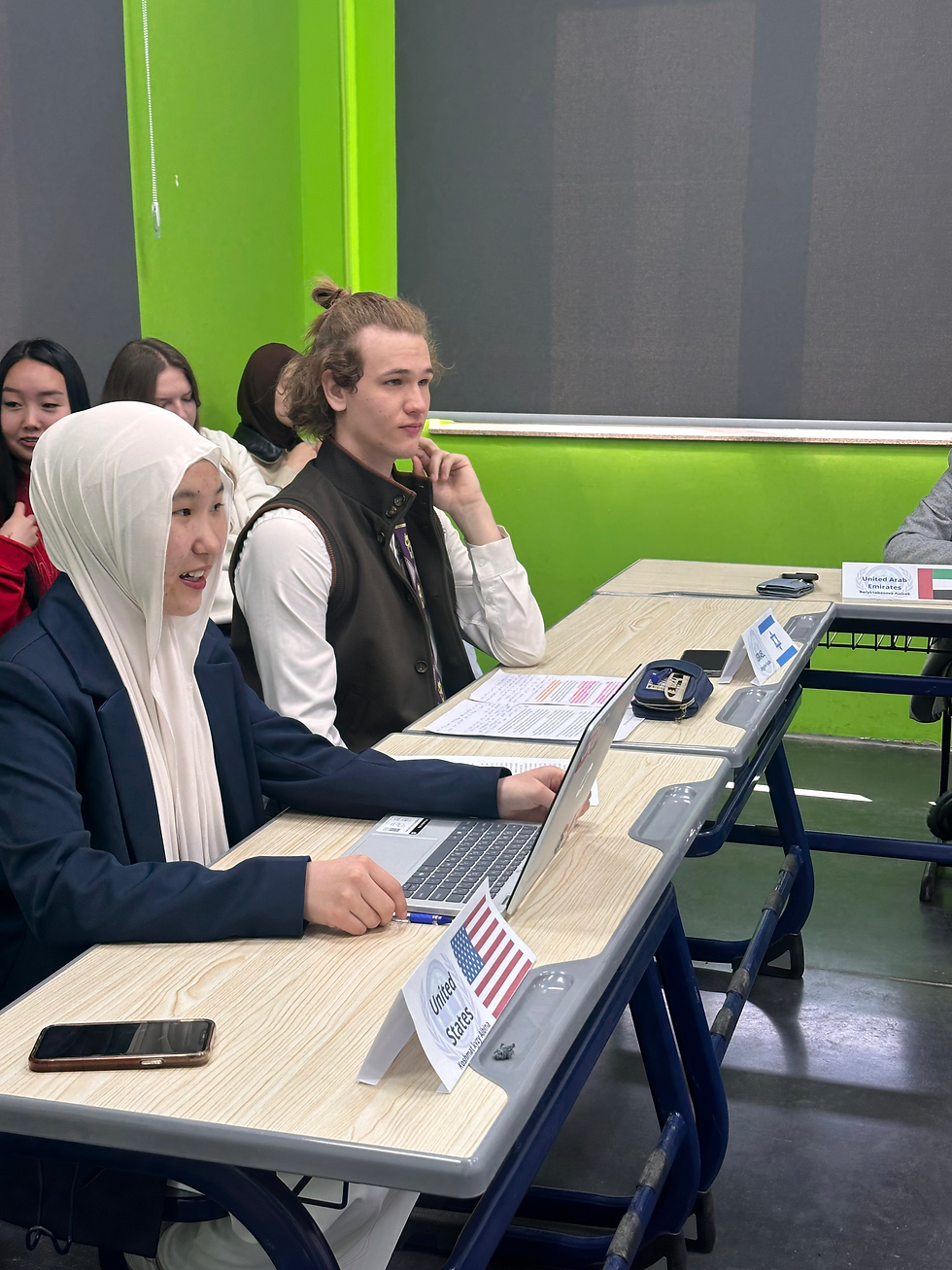
Students of the International Relations program at IUCA held a Model United Nations simulation focused on one of the most acute international situations of 2026 — the crisis in the Strait of Hormuz.
The event was opened by IUCA President John Clark, who delivered welcoming remarks to the participants.
As part of the diplomatic simulation, students represented the positions of the United States, Iran, Israel, Russia, China, the Gulf states, and the European Union. Each participant researched the national interests and foreign policy priorities of the actor they represented and prepared its position on the crisis.
A distinctive feature of the event was that the entire Model UN — country statements, questions and answers, debates, negotiations, and the drafting of the final resolution — was conducted entirely in English. This enabled the students to demonstrate a high level of English proficiency and their ability to use the language professionally when discussing complex issues of international politics and diplomacy.
Following the presentation of national positions, participants questioned one another, defended the interests of their respective states, responded to opposing arguments, and explored possible solutions to the crisis. The discussion developed into an intensive diplomatic debate in which students were required not simply to express their personal views, but to represent and defend the national interests of the states they represented.
The simulation provided students with an opportunity to strengthen their practical skills in diplomatic negotiation, argumentation, public speaking, critical analysis, professional communication in English, and representation of national interests.
The final stage of the Model UN involved negotiating and adopting a joint resolution. Students had to reconcile different, and in some cases opposing, positions and formulate provisions capable of gaining support from the participating parties. This gave them practical experience not only in diplomatic negotiations but also in drafting, discussing, and reaching agreement on multilateral international documents.
The Model UN formed part of the practice-oriented learning approach within IUCA’s International Relations program. Such simulations integrate students’ knowledge of international relations, diplomacy, and foreign languages and allow them to apply it to the analysis of current international crises.